


Table Of Content
- How VAPT Works: Vulnerability Assessment and Penetration Testing Process
- Why VAPT Matters for Organisations Operating in the UAE
- VAPT Process: Step-by-Step Security Testing Approach
- Types of VAPT Used in Modern IT Environments
- Vulnerability Assessment vs Penetration Testing: Key Differences Explained
- What Is Included in a Professional VAPT Report?
- VAPT Compliance Requirements in the UAE
- VAPT Certification: What Organisations Should Know
- Why Choose Cloudcore for VAPT Services in the UAE?
- Conclusion: Strengthening Cybersecurity with VAPT
What Is VAPT? A Complete Guide to Vulnerability Assessment and Penetration Testing in the UAE
What is VAPT? VAPT (Vulnerability Assessment and Penetration Testing) is a cybersecurity testing methodology used to identify security vulnerabilities in networks, applications, and IT systems. It combines vulnerability assessment and penetration testing to detect weaknesses and evaluate real-world security risks.
Cyber risks today affect organisations of every size, no longer sparing only large or multinational enterprises. In today's digital environment, organisations of all sizes in the UAE face increasing risks from cyberattacks, data breaches, and compliance failures. Understanding what VAPT is and how it protects your business is now a critical requirement, not an option.
This guide explains VAPT (Vulnerability Assessment and Penetration Testing) in a clear, practical way, covering its process, types, reports, compliance relevance, and how UAE businesses can use it to reduce real-world cyber risks.
How VAPT Works: Vulnerability Assessment and Penetration Testing Process
VAPT, or Vulnerability Assessment and Penetration Testing, is a systematic security testing approach that uncovers, evaluates, and verifies weaknesses in IT systems, applications, networks, and cloud-based environments.
It combines two complementary approaches:
- Vulnerability Assessment (VA): Identifies known security weaknesses using automated and manual techniques
- Penetration Testing (PT): Simulates real-world cyberattacks to exploit vulnerabilities and measure actual impact
By combining both, VAPT provides a realistic view of an organisation's security posture and helps prioritise risks based on severity and business impact.
Why VAPT Matters for Organisations Operating in the UAE
The UAE's rapidly growing digital economy has made cybersecurity a top priority for regulators, customers, and partners. Understanding what VAPT is and how it identifies real security weaknesses helps businesses proactively reduce cyber risks before attackers can exploit them. VAPT plays a key role in protecting organisations from operational, financial, and reputational damage.
Key reasons VAPT is essential in the UAE:
- Increased cyberattacks targeting Middle East organisations
- Regulatory and compliance requirements across multiple sectors
- Protection of sensitive customer, financial, and operational data
- Reduced risk of downtime and business disruption
- Stronger trust with clients, investors, and stakeholders
For many UAE businesses, VAPT is also a core requirement for audits and compliance frameworks.
VAPT Process: Step-by-Step Security Testing Approach
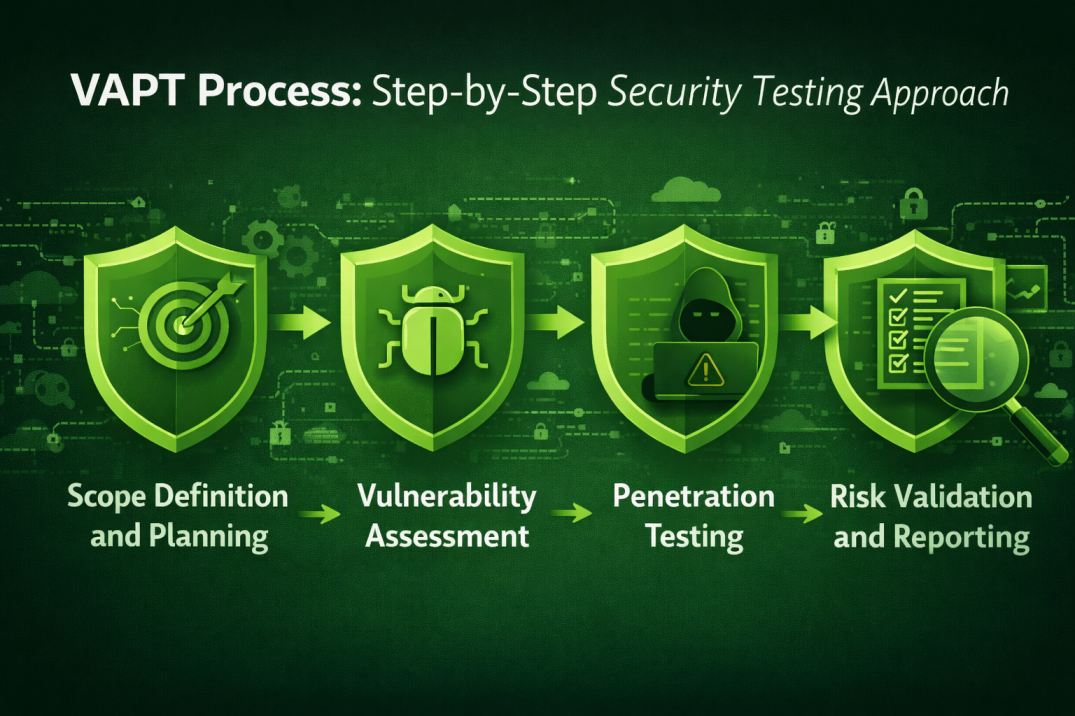
A professional VAPT process follows a structured methodology to ensure accurate, actionable results.
1) Scope Definition and Planning
The testing scope is defined, including systems, applications, IP ranges, and testing boundaries to ensure safe execution.
2) Vulnerability Assessment
Automated and manual techniques are utilised to uncover known vulnerabilities, misconfigurations, and outdated components.
3) Penetration Testing
Ethical hackers attempt to exploit identified vulnerabilities to assess the feasibility of real-world attacks.
4) Risk Validation and Reporting
Each vulnerability is validated, rated by severity, and mapped to business impact and compliance relevance.
Does your organisation need VAPT, or which scope is appropriate? A professional VAPT assessment can clarify your risk exposure.
Types of VAPT Used in Modern IT Environments
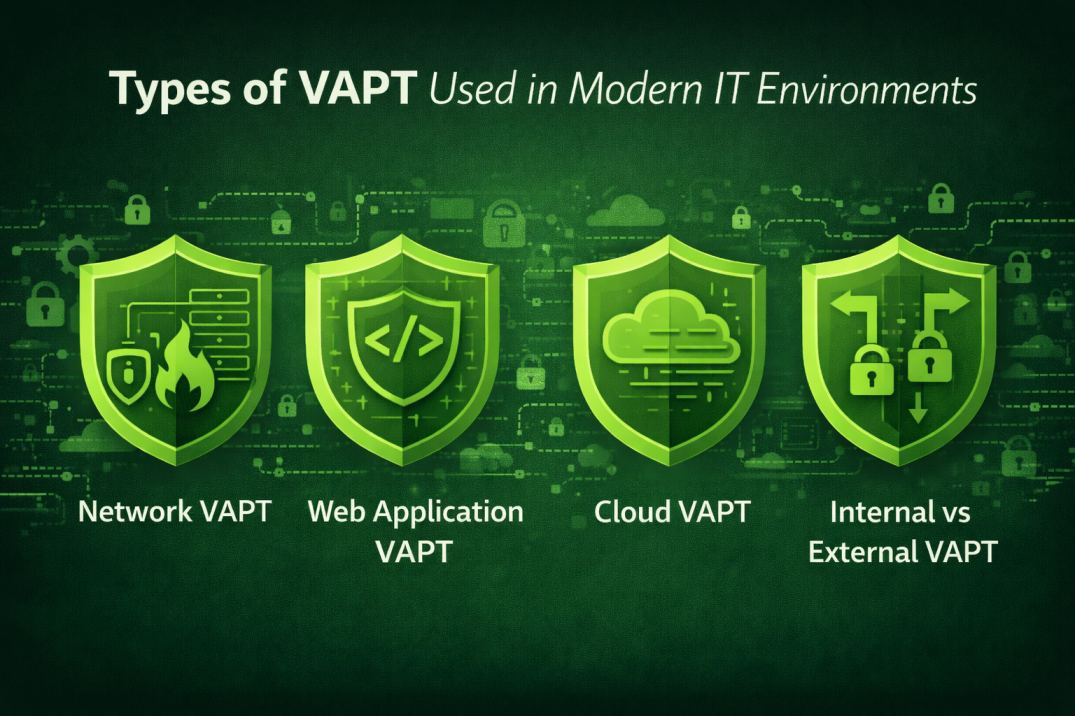
Different IT environments require different testing approaches.
Common types of VAPT include:
Network VAPT
Identifies weaknesses in internal and external networks, firewalls, and exposed services.
Web Application VAPT
Tests websites, portals, APIs, and web applications for security flaws.
Cloud VAPT
Assesses cloud environments such as AWS and Azure, as well as hybrid infrastructures, while following provider guidelines.
Internal vs External VAPT
- Internal VAPT: Simulates insider threats
- External VAPT: Simulates attacks from outside the organisation
Selecting the right VAPT type depends on your infrastructure, risk profile, and compliance needs.
Vulnerability Assessment vs Penetration Testing: Key Differences Explained
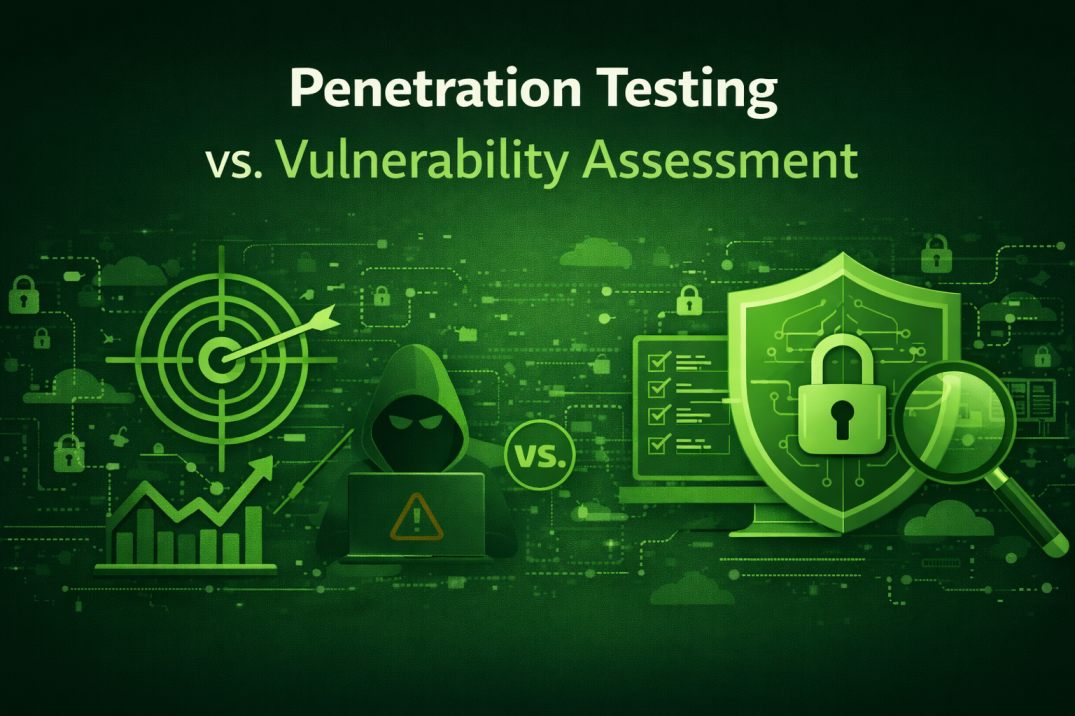
Although often used interchangeably, vulnerability assessment and penetration testing serve different purposes.
| Aspect | Vulnerability Assessment | Penetration Testing |
| Objective | Identify security weaknesses | Exploit weaknesses |
| Tools | Mostly automated | Manual + automated |
| Output | List of vulnerabilities | Proof of exploitation |
| Risk context | Theoretical | Real-world impact |
VAPT combines both, providing a complete and practical security evaluation.
What Is Included in a Professional VAPT Report?
A well-prepared VAPT report is a critical decision-making document for IT teams and management.
A standard report includes:
- Executive summary for leadership
- Detailed vulnerability findings
- Severity ratings (Critical, High, Medium, Low)
- Proof of exploitation (screenshots or logs)
- Business impact analysis
- Compliance mapping
- Clear remediation recommendations
This enables organisations to prioritise fixes effectively and demonstrate due diligence.
VAPT Compliance Requirements in the UAE
VAPT compliance is closely tied to many of the UAE's cybersecurity and data protection frameworks.
VAPT supports compliance with recognised UAE cybersecurity frameworks such as NESA compliance, ADHICS, PCI DSS, and SOC 2 (for SaaS and cloud-based businesses).
Regular VAPT assessments help organisations meet audit requirements and reduce compliance-related risks.
VAPT Certification: What Organisations Should Know
There is no single universal VAPT certification for businesses, but VAPT plays a key role in achieving and maintaining recognised certifications.
Important points to know:
- VAPT supports
- Certified and experienced professionals should conduct testing
- Certification ensures ethical testing standards and credibility.
What matters most is the quality, scope, and execution of the VAPT assessment.
Why Choose Cloudcore for VAPT Services in the UAE?
Cloudcore delivers VAPT services designed to address real-world threats and UAE compliance requirements.
What sets Cloudcore apart:
- Manual and automated testing approach
- UAE regulatory and compliance expertise
- Clear, actionable VAPT reports
- Confidential and controlled testing
- Post-assessment remediation guidance
VAPT is often the first step in a broader security strategy that includes continuous monitoring, threat detection, and response through managed cybersecurity services.
Speak with Cloudcore’s cybersecurity team to request a VAPT consultation tailored to your organisation’s risk and compliance needs.
Conclusion: Strengthening Cybersecurity with VAPT
Understanding what VAPT is is only the first step. Implementing it correctly is what protects your business from evolving cyber threats. For UAE organisations, VAPT compliance supports regulatory requirements, strengthens audit readiness, and demonstrates a proactive approach to cybersecurity risk management.
A professionally executed VAPT assessment helps organisations move from risk awareness to measurable protection.
FAQs
Is VAPT mandatory for companies in the UAE?

How often should VAPT be conducted?
How do vulnerability assessment and penetration testing differ in cybersecurity testing?
What does a VAPT report include?
Will VAPT affect live production systems?
Can VAPT support compliance requirements such as ISO 27001 and PCI DSS?
Is cloud infrastructure included in VAPT?
Yes. VAPT can be performed on cloud platforms such as AWS and Azure, as well as in hybrid environments.
Get in touch
Whether you need help with cloud integration, performance optimization, or simply want to explore a partnership

Your ideal service provider for secure, efficient, and scalable cloud solutions.


© 2024 Cloudcore. All rights reserved.